Creating an Aromatic Sensory Garden for Your Dog
 Tracy Brind
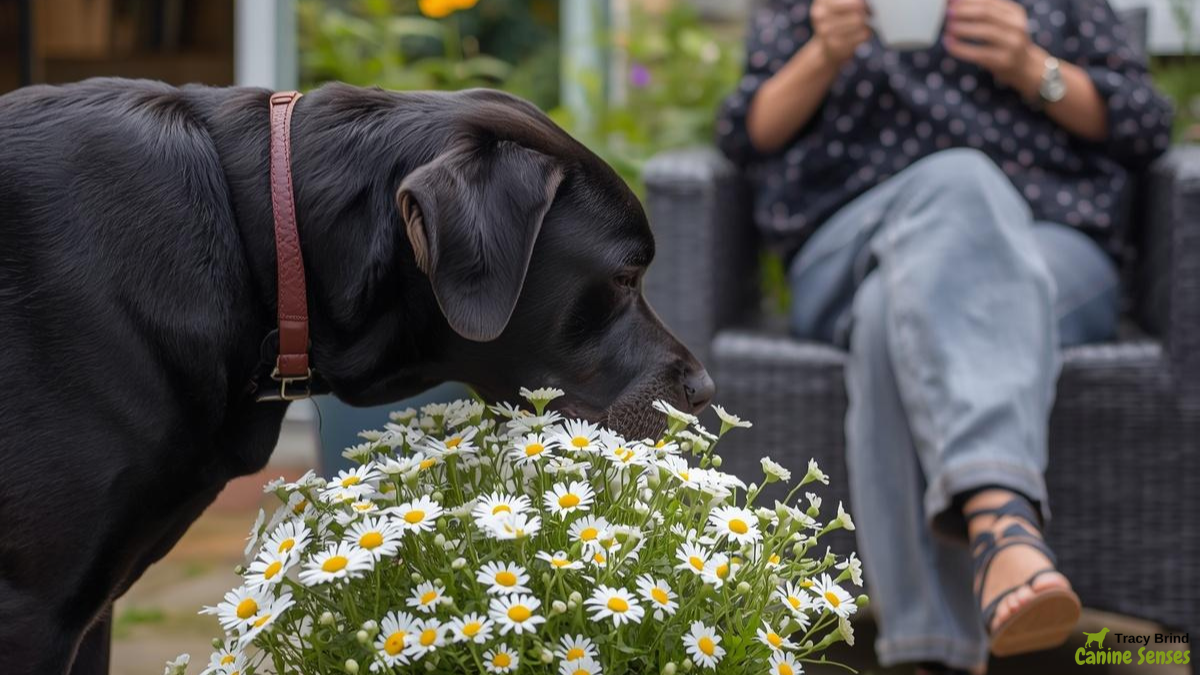
A simple way to enrich your dog’s world with scent
Dogs experience the world very differently from us.
While humans rely mainly on sight, dogs interpret their surroundings primarily through scent. Every sniff provides information about who has passed by, changes in the environment, and even the emotional state of other animals.
For dogs, scent is not simply interesting — it is essential.
Creating an olfactory sensory garden is a wonderful way to provide safe, natural scent enrichment for your dog. The best part is that it doesn’t require a large garden or specialist gardening skills. Even a few well-chosen plants in pots can provide meaningful sensory experiences.
Why Scent Is So Important to Dogs
Dogs have an extraordinary sense of smell.
Humans have around 5–6 million scent receptors in the nose. Dogs, depending on the breed, can have up to 300 million.
The area of the brain dedicated to analysing scent is also proportionally far larger in dogs than in humans. This allows them to process smells with remarkable detail.
Dogs can detect animals that passed hours earlier, individual human scent signatures, hormonal and emotional changes, and subtle environmental shifts.
Dogs also possess a specialised sensory structure known as the Vomeronasal organ, which helps them detect chemical signals called pheromones.
In other words, when dogs sniff the world around them, they are gathering information, not simply smelling something pleasant.
Living in a Scent-Driven World
Sniffing is a fundamental behavioural need for dogs.
However, modern lifestyles sometimes limit opportunities for dogs to explore scent. Walks can be rushed, gardens may be artificial, and natural sensory experiences can be reduced.
Providing scent opportunities can support mental stimulation, relaxation, confidence, emotional regulation, and natural curiosity.
An aromatic area in your garden gives dogs the chance to explore scents freely and without pressure. The dog decides which plant to approach, how long to sniff, and when to move away. That choice is very important.
What Is a Dog Aromatic Garden?
An aromatic garden is simply a space designed to offer a variety of safe, naturally scented plants for dogs to explore.
It can include aromatic herbs, grasses, textured plants. It doesn’t need to be large or complicated.
An aromatic garden can work in small gardens, patios, balconies, courtyards and even indoors. Four or five plant pots can create a small scent exploration area.
The following plants are easy to grow, widely available, and suitable for containers.
Easy Plants for a Dog Sensory Garden
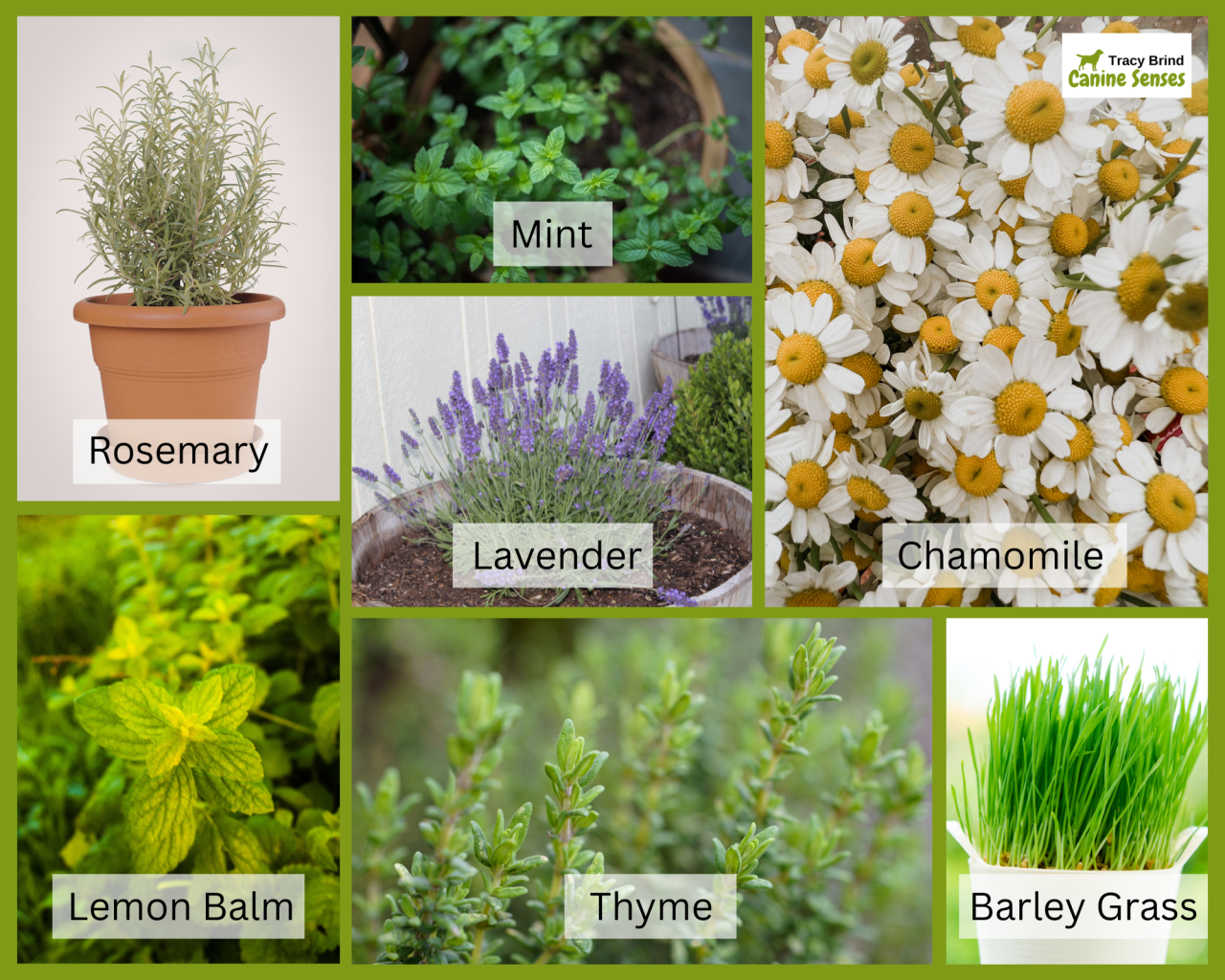
Lavender
Lavender is a hardy aromatic plant with a gentle floral scent. It grows well in pots and enjoys sunny conditions. Place it in full sun, use well-drained soil, and avoid overwatering.
Rosemary
Rosemary produces a strong herbal scent and is extremely hardy. It grows well in containers and can develop into a small shrub over time. It prefers sunny locations and benefits from occasional trimming.
Mint
Mint is one of the easiest herbs to grow and produces a fresh, bright scent. Because it spreads quickly, it is best grown in pots. It grows well in sun or partial shade and benefits from regular trimming.
Thyme
Thyme is a small herb that works beautifully in containers or window boxes. It releases a warm herbal scent when brushed and thrives in sunny, well-drained conditions.
Lemon Balm
Lemon balm produces a soft citrus fragrance and is very easy to grow, making it ideal for beginner gardeners. It grows happily in sun or partial shade and prefers lightly moist soil.
Chamomile
Chamomile has delicate flowers and a light apple-like scent. It adds both fragrance and visual interest to a sensory garden and prefers full sun with moderate watering.
Dog-Safe Grasses
Many dogs enjoy investigating grasses. Oat grass, barley grass, and wheatgrass can easily be grown in trays or small pots and add additional scent and texture to the garden.
Designing Your Dog’s Sensory Garden
Creating an aromatic garden is simple. Arrange your pots in a loose semicircle so your dog can move easily between them.
Try to include plants of different heights, a variety of scents, and different leaf textures.
The goal is not to create a decorative garden but rather a small exploration space for your dog.
If you have a large dog you might like to consider raising the pots or area to make it easier for your dog to access. This is ideal for our more senior dogs who may find it difficult to bend to the floor.
Introducing Your Dog to the Garden
When your aromatic garden is ready, simply allow your dog to explore it naturally.
Some dogs will show immediate curiosity, while others may take a little time. Both responses are completely normal. The key principle is always choice.
You could try hanging around the area yourself - or taking a chair and cup of tea, you might find your dog naturally explores if you are in the area too. There is no need to offer your dog the plants to sniff, in fact it is better if you don't, just let him explore at his own pace.
Exploration might include simply sniffing the plant or may involving eating the plant, in whole or in part. The above plants are safe if your dog chooses to ingest.
To differentiate between plants he is allowed to interact with and those you would prefer not to be dug up and ingested (for safety and financial reasons) you may like to keep the aromatic garden to a particular area.
Safety Considerations
Safety is important when creating any garden space for dogs.
Avoid planting species that are known to be toxic to dogs.
Here is a link to a list of plants etc to avoid.
It is also wise to avoid pesticides and herbicides, use organic soil where possible, ensure pots are stable, and supervise early interactions while your dog becomes familiar with the space.
It can actually be safer for dogs to interact with plants grown in their own garden or containers at home. When you grow the plants yourself, you know exactly how they have been cared for and can ensure that no pesticides, herbicides, or chemical fertilisers have been used.
In the wider environment, such as parks, verges, or public green spaces, plants may have been treated with sprays that are not always visible. Dogs investigating or brushing against these plants could potentially come into contact with residues. By growing your own herbs and plants and avoiding chemical treatments, you can provide a safer space for your dog to explore scent and interact with plants naturally.
Observing Your Dog’s Preferences
One of the most interesting aspects of aromatic gardens is observing which plants your dog chooses to explore.
Some dogs will repeatedly return to particular scents while ignoring others. These preferences may also change over time.
Simply observing your dog can provide valuable insight into what scents they find calming, interesting, or engaging.
Watching these behaviours when I am working with Zoopharmacognosy self selection and our animals, gives me valuable insights into their selection choices.
Final Thoughts
Creating an aromatic garden for your dog does not require a large space or advanced gardening knowledge.
Even a small collection of aromatic herbs in pots can provide meaningful enrichment. By offering opportunities for dogs to explore scent, we support one of their most powerful and important senses — their extraordinary nose.
And in doing so, we allow them to experience the world in the way nature intended.

If you would like to know more about an aromatic garden for your companions or Zoopharmacognosy, self selection or other holistic services I offer please visit my website. Or contact me via email: caninesenses@btinternet.com
If this article resonated with you, you’re already on the path to seeing your dog differently. I also run a membership with my friend and colleague, Jules. Holistic Haven Circle membership is a welcoming space where guardians learn how to support their dogs naturally through scent, plant wisdom, and choice-based wellbeing. It is a private, supportive space where you can learn more. There is no commitment, you just stay for as long as you like. There is back content for you to dip in to and new webinars and Q+A's every month.